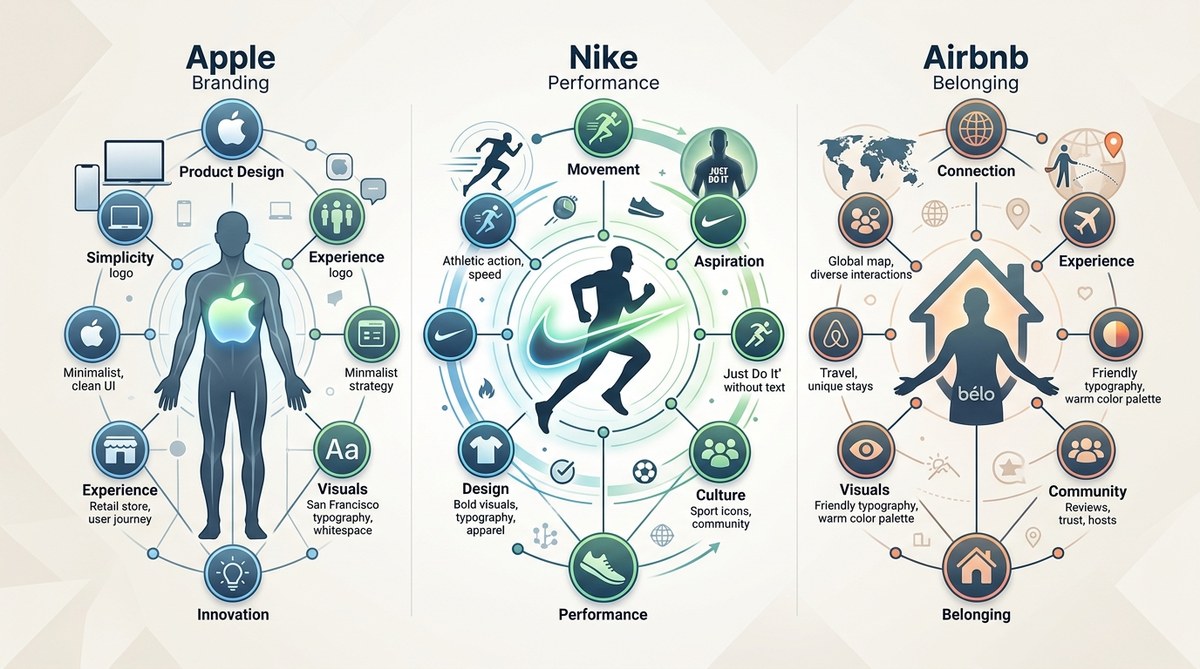
Building an iconic brand identity is like creating a personality that sticks with people for years. It’s not just about a logo or pretty colors. It’s about crafting a system that resonates deeply and stays relevant. Top brands like Apple, Nike, and Airbnb don’t become legendary by chance. They follow clear principles that make their brands instantly recognizable and emotionally compelling. Understanding what they get right can help you shape a memorable brand of your own.
A successful brand identity combines visual consistency, [emotional connection](https://www.who.int/health-topics/mental-health#tab=tab_1), and a clear system. By studying top brands, you learn how to craft a memorable presence that grows with your business and stays true to your core values.
What Defines Truly Iconic Brand Identities
At their core, iconic brands create a visual and emotional system that users can recognize instantly. Their identities aren’t just a logo or a slogan but a cohesive framework that spans everything from product design to customer service. Apple’s sleek minimalism, Nike’s motivational swoosh, and Airbnb’s sense of belonging all reflect deeper brand strategies. These brands succeed because they focus on consistent messaging, strong storytelling, and a visual language that evolves without losing its essence.
Key Elements That Make a Brand Unforgettable
Successful brand identities share several vital traits:
- Simplicity: A clean, memorable logo makes brands easy to recognize and recall.
- Consistency: Using the same visual style, tone, and messaging across all touchpoints builds trust.
- Emotional resonance: Connecting with customers on a feeling level makes a brand memorable.
- Differentiation: Standing out in a crowded market requires a unique visual and verbal language.
- Adaptability: The most iconic brands evolve while maintaining their core identity.
These elements work together to create a powerful system that goes beyond visuals. It involves strategic positioning, storytelling, and a clear understanding of the audience.
How Top Brands Nail Their Identity Strategies
1. Focus on core values and storytelling
Apple, Nike, and Airbnb all tell stories that align with their core values. Apple emphasizes innovation and simplicity. Nike champions athletic achievement and perseverance. Airbnb highlights community and belonging. Their messaging is consistent and emotionally charged. This storytelling anchors their visual identity and makes their brands relatable.
2. Use visual systems that grow with the business
A great brand identity is flexible. Nike’s swoosh remains simple but adapts to different campaigns and product lines. Airbnb’s logo, the Bélo, symbolizes community but works across digital and physical touchpoints. These brands develop visual systems that can evolve without losing their recognition factor.
3. Maintain visual consistency across channels
Apple’s minimalistic aesthetic is present in product design, packaging, advertising, and retail spaces. Nike’s iconic swoosh appears on shoes, apparel, and digital platforms. This consistency reinforces brand recognition and builds trust.
4. Invest in emotional branding
Airbnb’s branding creates feelings of trust and community. They focus on personal stories and user experiences. This emotional connection makes their brand memorable and fosters loyalty.
5. Build a system, not just assets
According to branding experts, a scalable brand system involves guidelines, tone of voice, visual language, and experience standards. This system ensures every touchpoint reinforces the brand’s identity, making it more than just a logo.
Practical Steps to Create Your Own Iconic Brand Identity
Developing a compelling brand takes deliberate effort. Here are five steps to help you build a system that sticks:
- Define your core values and story. Understand what your brand stands for and craft a story that resonates with your audience.
- Create a visual language. Develop a logo, color palette, typography, and imagery style that reflect your values and are adaptable.
- Develop brand guidelines. Document how your visual and verbal identity should be used across all platforms.
- Ensure consistency. Apply your system uniformly in marketing, product design, customer service, and internal communications.
- Evolve thoughtfully. Keep your core intact while refining your identity based on growth and market changes.
Tips for Quick Application
- Use a template for your brand style guide to keep visual elements aligned.
- Regularly audit your brand assets to ensure they follow your guidelines.
- Train team members on brand standards to maintain consistency.
- Refresh your visual system periodically without losing recognition.
- Collect feedback from your audience to gauge emotional connection.
Techniques That Make or Break Your Brand System
| Technique | What It Does | Common Mistake |
|---|---|---|
| Visual consistency | Reinforces recognition and trust | Using different logos or colors randomly |
| Clear brand messaging | Builds emotional connection | Mixing tones or inconsistent language |
| Storytelling alignment | Creates a relatable, memorable narrative | Ignoring audience insights |
| Simplified logo | Easy recognition, versatile for all uses | Overly complex designs |
| Adaptability | Ensures growth without losing core identity | Rigid branding that cannot evolve |
“A scalable brand system is like a well-built framework. It supports growth and adaptation while keeping the core identity intact,” advises branding strategist Sarah Lee.
Common Mistakes in Building Iconic Brands
- Overcomplicating visual elements
- Neglecting consistency across channels
- Failing to understand the audience’s emotional drivers
- Ignoring the importance of storytelling
- Rigid designs that don’t evolve over time
Building a System That Lasts
Brands like Apple, Nike, and Airbnb show that a well-crafted brand identity is a living system. It grows, adapts, and deepens its connection with users. They invest in understanding their audience, maintain visual coherence, and tell stories that matter.
Practical Tips for Sustained Success
- Regularly review your brand guidelines
- Keep your visual and verbal language aligned
- Evolve your system with your business growth
- Engage with your audience to refine your story
- Be consistent but flexible
Your Brand’s Next Chapter
Creating an iconic brand identity isn’t about quick fixes. It’s about building a system that reflects your values, resonates emotionally, and adapts over time. By studying top brands and applying these principles, you can craft a memorable presence that endures.
Remember, a strong brand system is a foundation that supports every aspect of your business. Take time to define, develop, and refine your identity. Your audience will thank you by becoming loyal advocates.
Happy branding! Use these insights to start shaping an identity that’s not just memorable but also meaningful and adaptable. Your brand can be the next icon in its industry.
