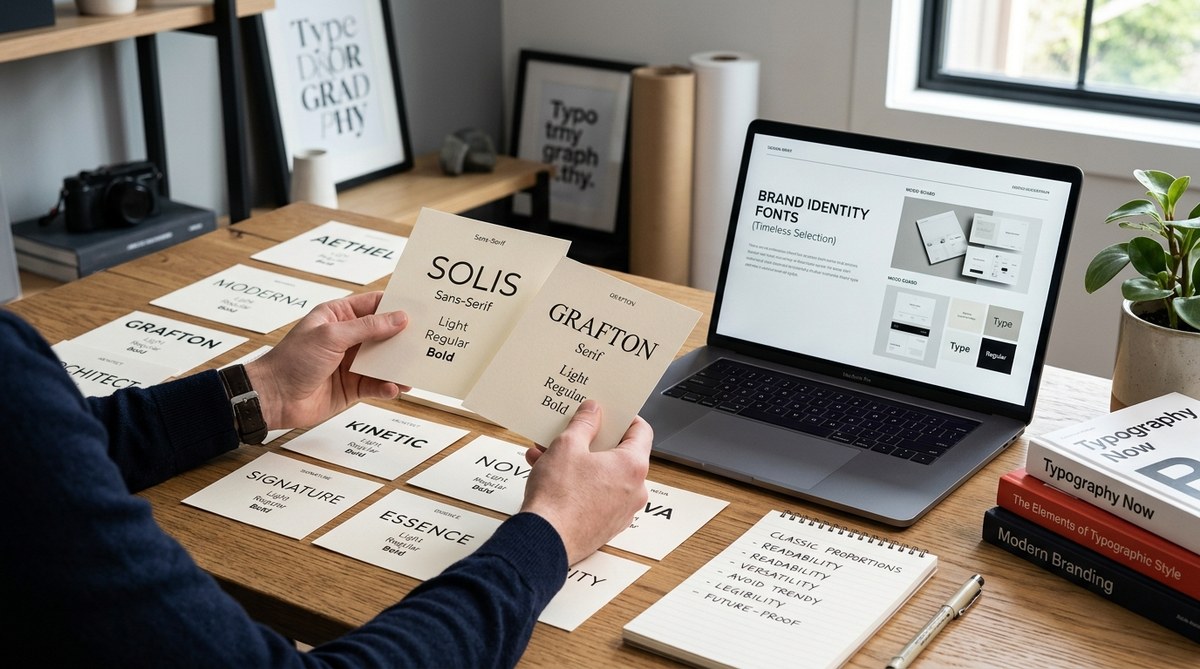
Choosing the right fonts for your brand is more than picking what looks good today. It’s about selecting typefaces that will serve your business well for years to come. The goal is to avoid fonts that will look outdated or trendy in just a few years. Instead, focus on timeless fonts that support your brand’s personality and adapt to future trends. This approach helps create a consistent visual identity that builds trust and recognition over time.
Choosing timeless brand fonts involves understanding font personality, focusing on versatility, and avoiding fleeting trends. This ensures your brand remains relevant, recognizable, and professional for years to come.
Why selecting the right fonts matters for your brand
The fonts you use are more than just letters on a page. They communicate your brand’s voice and personality. A well-chosen font enhances trust, conveys professionalism, and supports your brand story. Using trendy fonts that fall out of favor quickly can diminish your credibility. Instead, choosing classic fonts that stand the test of time means your branding stays consistent and relevant. When your fonts age well, your entire visual identity remains strong, saving you from constant rebranding.
Characteristics of fonts that stay relevant
Timeless fonts share key traits that make them versatile and enduring. They tend to be simple, clean, and easy to read. They also align with a wide range of brand personalities, from elegant to approachable. Here are some hallmarks of fonts that won’t look dated in a few years:
- Classic style with minimal embellishments
- High readability at various sizes
- Compatibility across platforms and mediums
- Subtle personality that supports your brand voice
How to choose fonts that last beyond trends
Follow these steps to select fonts that will serve your brand well over time:
-
Identify your brand personality
Understand the core traits that define your business. Are you aiming for professional, friendly, innovative, or sophisticated? Your font choice should reflect this essence. -
Focus on font versatility
Choose fonts that work well in various applications—from your website to print materials. A versatile font can be used for headlines, body text, and accents without losing its clarity or style. -
Prioritize readability and simplicity
Avoid overly decorative fonts. Stick with clean, straightforward typefaces that are easy to read at any size and on any device. -
Select neutral, classic styles
Sans-serif fonts like Helvetica or Futura and serif fonts like Garamond or Baskerville are examples of timeless choices. They have been trusted for decades and adapt to many contexts. -
Pair fonts thoughtfully
Limit your palette to two or three fonts. Use a primary font for headlines and a secondary for body text. Ensure they complement each other without clashing or looking trendy. -
Test fonts in real-world applications
Visualize your fonts in your actual branding contexts. Use tools like Fonts in Use to see how fonts are applied across successful brands. -
Avoid fonts that are overly trendy
Fonts with excessive ornamentation, handwriting styles, or novelty features tend to age quickly. Focus on understated, classic options.
Common pitfalls when selecting brand fonts
| Technique or mistake | Why it hurts your brand | How to avoid it |
|---|---|---|
| Relying on trendy fonts | They look fresh now but date quickly | Stick with established, classic typefaces |
| Using too many fonts | Creates visual chaos and inconsistency | Limit to two or three fonts for cohesion |
| Ignoring scalability | Fonts may look great on screens but pixelate in print | Test font sizes across formats early |
| Overcomplicating choices | Difficult to maintain consistency | Choose simple, versatile fonts with clear personalities |
| Forgetting brand personality | Fonts don’t support your brand voice | Match font style to your brand’s core traits |
“A font that stands the test of time is like a good friend—reliable, familiar, and always appropriate.” – Expert typographer
Practical tips for building your brand’s font system
- Start with a primary font that embodies your brand personality. For example, a luxury brand might choose a refined serif like Didot.
- Pair it with a complementary sans-serif for digital clarity, such as Helvetica Neue.
- Ensure your chosen fonts are available for licensing across all your intended platforms.
- Create a font hierarchy to guide users naturally through your content—headlines, subheadings, body text, captions.
- Document your font choices in a style guide to maintain consistency over time.
Mistakes to watch out for and how to fix them
| Mistake | Consequence | Fix |
|---|---|---|
| Choosing decorative fonts for body text | Hard to read, unprofessional look | Use simple, classic fonts for main content |
| Overusing script fonts | Looks cluttered and outdated | Reserve decorative fonts for accents only |
| Ignoring font licensing | Legal issues and limited usage | Always verify font licenses before adopting |
Inspiration from brands that master timeless typography
Look at brands like Apple, The New York Times, or Nike. They use fonts that are familiar, straightforward, and adaptable. Their type choices have remained consistent for years because they support their brand identity without relying on fleeting trends. You can emulate this approach by sticking to a core set of fonts that reinforce your brand’s values and personality.
Final thoughts on building a lasting typographic identity
Choosing fonts that stand the test of time is an investment in your brand’s future. Focus on simplicity, versatility, and alignment with your personality. Test your choices in real-world scenarios and avoid the trap of following every new trend. Your goal is to create a visual language that feels authentic and remains relevant regardless of shifting design fads. Once you establish your classic font system, maintaining brand consistency becomes much easier and more natural.
Your next step in creating a lasting brand image
Applying these principles will help you build a font foundation that supports your business for years. Keep your brand’s voice in mind, prioritize clarity, and select typefaces that resonate with your audience. Remember, timeless fonts are an asset that will serve your brand well as it grows and evolves. Don’t rush the process—take the time to choose fonts that truly reflect your brand’s personality and stay relevant over time.
