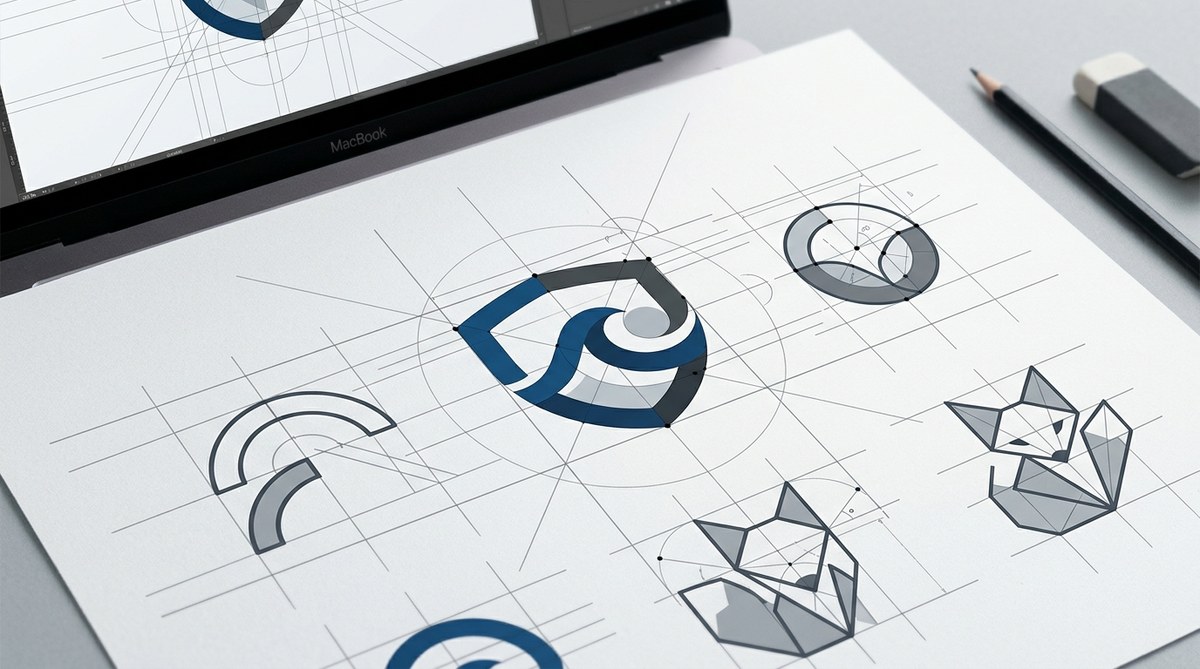
Creating a logo that feels balanced and visually appealing is a challenge many designers face. The grid method offers a straightforward way to bring structure, consistency, and geometric harmony into your logo projects. By using grids as a foundation, you can craft logos that are not only attractive but also scalable and versatile. This approach is especially helpful for beginners and intermediate designers aiming to develop confidence in their design process. Let’s dive into how you can master the grid method for logo creation.
Why the grid method is a game-changer in logo design
The grid method is a systematic approach rooted in geometric principles. It helps designers maintain proportion, alignment, and harmony, making logos look polished and professional. Think of it as the skeleton of your design—giving you a reliable structure to build upon. Many successful brands owe their visual coherence to grid systems, whether it’s the golden ratio or simple square grids. Incorporating grids into your workflow can dramatically improve your ability to produce balanced logos consistently.
“Using grids in logo design isn’t about restricting creativity. It’s about providing a visual language that guides your ideas into compelling, harmonious forms.” – Design expert
How to implement the grid method in logo creation
Applying the grid method involves a clear step-by-step process. Here are practical steps you can follow:
1. Choose your grid system
Start by selecting an appropriate grid based on your design goals. Common options include:
- Square grids: Perfect for creating symmetrical and modular logos.
- Golden ratio grids: Use the divine proportion for naturally pleasing compositions.
- Isometric grids: Ideal for three-dimensional or technical logos.
- Hexagon grids: Great for modern, geometric aesthetics.
You can find free templates and guides for these grid types at resources like Akrivi.
2. Sketch your initial ideas within the grid
Begin with rough sketches, aligning your shapes and elements to the grid lines. This step ensures your design maintains proportion and harmony. Don’t worry if your initial sketches are rough; the goal is to understand how your ideas fit within the grid’s structure.
3. Refine and balance your design
Once you have a sketch that aligns with the grid, refine the shapes. Adjust sizes and positions to achieve visual balance. Check that your logo remains consistent across different grid sections, making sure no element feels out of place.
4. Test scalability and versatility
Your logo should work well at different sizes. Use the grid to see how your design maintains clarity when scaled down or up. This step is crucial for ensuring your logo performs across various applications, from favicon icons to billboard banners.
5. Finalize with precision
Polish your logo by fine-tuning alignments and proportions. Use the grid as a reference throughout this process to keep everything aligned and harmonious.
Essential tips to perfect your grid-based logos
- Keep it simple: Over-complicating your grid can lead to cluttered designs. Focus on clarity and minimalism.
- Use symmetry thoughtfully: Symmetry enhances balance but can sometimes feel static. Break symmetry intentionally for visual interest.
- Prioritize readability: Ensure your logo remains recognizable and clear, especially when scaled to small sizes.
- Maintain consistency: Use the same grid system across multiple logo variants for brand cohesion.
Common mistakes to avoid
| Mistake | Explanation | How to fix it |
|---|---|---|
| Overly complicated grids | Too many grid lines can complicate the design process | Stick to a simple grid system that suits your concept |
| Ignoring negative space | Overlooking space around and within elements causes imbalance | Regularly check the negative space for harmony |
| Not testing at different sizes | Designs may look good big but unreadable small | Always scale your logo to test its clarity |
| Relying solely on symmetry | Overuse can make logos look rigid | Introduce asymmetry for dynamic appeal |
Practical techniques to enhance your grid logos
- Align elements precisely: Use the grid to snap shapes into perfect positions.
- Divide the grid proportionally: Use ratios like the golden ratio to distribute space evenly.
- Leverage negative space: Create clever shapes or initials within the grid’s negative areas.
- Incorporate geometric shapes: Circles, squares, and triangles fit naturally into grids, creating harmony.
Expert insights on the power of structured design
“A well-structured grid system acts as an invisible guide, ensuring your logo is balanced, scalable, and visually captivating. It’s the secret behind many iconic logos.” – Professional designer
Navigating the pitfalls of grid-based logo design
While the grid method offers clarity, it’s easy to fall into certain traps. For instance, over-reliance on grids can lead to boring, overly rigid logos. To avoid this, use the grid as a flexible tool rather than a strict rulebook. Remember, the goal is to create a logo that feels natural and authentic.
Consider experimenting with different grid types to see which best suits your brand identity. For example, a tech startup might lean toward hexagon grids for a modern look, while a luxury brand might prefer the golden ratio for classic elegance.
How to customize grid templates to your brand
Once you understand the basics, personalize your grid system:
- Adjust the grid’s spacing to match your brand’s personality.
- Combine different grid types for complex logos.
- Use grid overlays in your design software to maintain consistency.
Templates and guides are available at Akrivi, giving you a head start in applying structured grids effectively.
Wrapping up your grid method journey
Mastering the grid method is about more than just drawing lines. It’s about developing an eye for proportion, balance, and harmony. With practice, you’ll be able to craft logos that are both aesthetically pleasing and functionally versatile. The key is to start simple, test often, and refine with purpose.
Remember, every great logo begins with a solid foundation. Use grids as your guiding framework, and your designs will stand the test of time and scale. Embrace the structured approach, and let your creativity thrive within the harmonious boundaries of the grid system.
Your next step in structured logo design
Applying the grid method takes patience and practice, but it’s a skill that pays off. Begin with basic grids, experiment with different styles, and always test your designs at various sizes. As you grow more confident, customize your grid system to match your unique branding needs. Keep refining and pushing your boundaries—balanced logos are within your reach.
